 By Pamela Rose
The nature of personal and commercial transportation is undergoing the most radical transformation since the invention of the assembly line. For over a century, vehicle safety engineering focused primarily on passive safety. These were technologies designed to protect occupants during the terrifying moments of an actual crash, such as high-strength steel cages, crumple zones, seatbelt pretensioners, and multi-stage airbags.
While passive safety features have saved countless lives, they only activate after a mistake has already occurred on the road. The modern automotive era is defined by a philosophical shift toward active safety. By leveraging cutting-edge computing power, advanced sensor arrays, and real-time data processing, modern vehicle technology actively works to prevent accidents from ever happening in the first place. This technological revolution is fundamentally altering traffic dynamics, protecting not just drivers and passengers, but also motorcyclists, cyclists, and pedestrians.
The Sensory Network: Cameras, Radar, and LiDAR
At the core of all modern vehicle safety technology is an intricate network of electronic sensors that act as the eyes and ears of the automobile. These systems continuously monitor the environment surrounding the vehicle, scanning for hazards that a human driver might miss due to distraction, poor visibility, or fatigue.
Advanced Optical Cameras
High-resolution cameras are typically mounted behind the rearview mirror facing forward, as well as around the exterior bumpers and side mirrors. These cameras act as visual sensors, feeding raw video data into the vehicle’s onboard computer. Sophisticated machine-learning algorithms analyze this data in real-time, allowing the vehicle to recognize painted lane markings, traffic signs, speed limits, and the distinct shapes of pedestrians and bicyclists moving along the roadside.
Radar Systems
Radio Detection and Ranging sensors are usually hidden behind the front grille and rear bumper of modern vehicles. Radar works by emitting high-frequency radio waves and measuring the time it takes for them to bounce off surrounding objects. Unlike human eyes, radar is completely unaffected by adverse weather conditions. It can see perfectly through blinding rain, thick fog, heavy snow, and absolute darkness, accurately calculating the precise distance and relative speed of vehicles ahead and behind.
LiDAR Technology
Light Detection and Ranging represents the cutting edge of automotive environmental mapping. LiDAR sensors emit millions of invisible laser pulses per second to create a highly accurate, three-dimensional point cloud of the vehicle’s surroundings. This technology allows advanced safety systems to determine the exact shape, size, and orientation of every object within a long radius, providing an unprecedented level of situational awareness to the vehicle’s central processing unit.
Advanced Driver Assistance Systems: The Co-Pilot of the Modern Era
By pairing this powerful sensor network with automated braking and steering controls, manufacturers have developed Advanced Driver Assistance Systems. These features serve as an alert, digital co-pilot that steps in when human reaction times prove too slow.
Automatic Emergency Braking
This technology is arguably the most significant safety advancement since the seatbelt. If the forward-facing radar or cameras detect that traffic ahead has stopped abruptly, or that a pedestrian has stepped into the path of the vehicle, the system instantly calculates the risk of a collision. It first provides loud auditory and bright visual warnings to the driver. If the driver fails to press the brake pedal within milliseconds, the system automatically applies maximum hydraulic braking pressure to stop the vehicle or drastically reduce the severity of the impact.
Lane Keep Assist and Departure Warning
Human drivers are prone to momentary lapses in concentration, which can cause a vehicle to drift dangerously out of its lane on the highway. Lane departure warning systems monitor highway lane markers and vibrate the steering wheel or sound an alarm if the vehicle begins to cross the line without a turn signal activated. More advanced Lane Keep Assist systems go a step further by applying gentle, automated steering corrections to guide the vehicle safely back into the center of the lane.
Blind Spot Detection and Rear Cross-Traffic Alert
Side mirrors naturally leave visual blind spots along the rear quarter panels of a car, making lane changes risky. Blind spot monitoring utilizes rear-facing radar sensors to detect vehicles lingering in these hidden areas, illuminating a warning icon on the side mirror glass. When reversing out of a tight parking space where visibility is blocked by adjacent vehicles, rear cross-traffic alerts scan the perpendicular lanes, warning the driver of rapidly approaching traffic from either side.
The Evolution of Lighting and Night Visibility
Driving at night introduces a disproportionately high percentage of fatal traffic accidents due to degraded human depth perception and limited visibility. Vehicle design is addressing this vulnerability through revolutionary illumination technology.
Traditional high-beam headlights provide excellent long-distance illumination, but drivers must constantly switch them off to avoid blinding oncoming motorists, often leaving them in relative darkness for extended periods. The introduction of Adaptive Driving Beam technology resolves this compromise entirely.
Adaptive headlights use an array of individually controlled light-emitting diodes linked to the vehicle’s forward-facing camera. When the camera detects the headlights of an oncoming car or the taillights of a vehicle ahead, the system instantly turns off or dims only the specific LEDs aimed directly at that vehicle. The rest of the headlight array remains fully illuminated at high-beam intensity, casting maximum light onto the surrounding road, shoulders, and potential hazards without causing disabling glare for other drivers on the road.
Connected Vehicles: Cellular V2X Communication
The future of automotive safety relies heavily on vehicles communicating not just with their drivers, but with each other and the surrounding infrastructure. This technology is known as Vehicle-to-Everything connectivity.
-
Vehicle-to-Vehicle (V2V): By utilizing dedicated short-range communication or cellular networks, cars can continuously broadcast their speed, position, braking status, and steering angle to all other connected vehicles within a certain radius. If a car ahead executes an emergency panic stop around a blind highway curve, your vehicle can receive that data instantly and alert you before the vehicle physically comes into view.
-
Vehicle-to-Infrastructure (V2I): This allows automobiles to interact with smart traffic lights, construction barriers, and road signs. A connected vehicle can warn its driver that a traffic light around the corner is about to turn red, or that a construction crew is working just past a highway crest, allowing for smooth, proactive deceleration.
-
Vehicle-to-Pedestrian (V2P): This emerging technology allows vehicles to detect the cellular signals of smartphones carried by pedestrians and cyclists, providing an extra layer of detection even if the person is physically obscured behind a parked delivery truck.
Introspective Safety: Driver Monitoring Systems
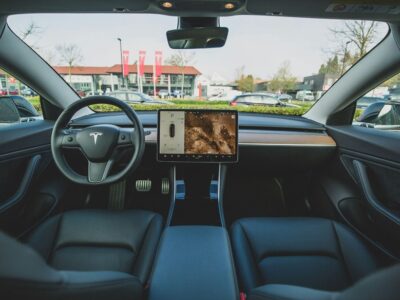
While monitoring the external environment is vital, modern vehicles are increasingly turning their attention inward to monitor the physiological state of the driver. Human error, stemming from extreme fatigue, medical emergencies, or smartphone distraction, remains the root cause of the vast majority of motor vehicle accidents.
Modern driver monitoring systems utilize small infrared cameras integrated into the steering column or dashboard, aimed directly at the driver’s face. These systems track eye gaze direction, blink duration, and head position.
If the camera detects that the driver’s eyes have left the road for more than a few seconds to look down at a mobile device, or if the blinking pattern indicates that the driver is falling asleep, the vehicle initiates a sequence of progressive alerts. If the driver does not respond due to a medical crisis, such as a heart attack or seizure, advanced safety suites can automatically activate the hazard lights, steer the vehicle safely to the highway shoulder, and bring it to a complete stop while initiating an emergency call for medical assistance. Through these multi-layered innovations, technology is successfully taking the margin of human error out of the safety equation.
Frequently Asked Questions
How do automatic emergency braking systems function when driving on extremely slippery ice or snow?
Automatic emergency braking systems rely on the same sensor data regardless of weather, but their effectiveness is limited by the physical laws of traction. When a vehicle detects an impending collision on ice or snow, it will still engage the brakes instantly. However, the vehicle’s anti-lock braking system will modulate the stopping force to prevent the tires from locking up and skidding, meaning the total stopping distance will be significantly longer than on dry asphalt.
Can radar or LiDAR sensors used in active safety systems pose any long-term health risks to pedestrians?
No, the sensors used in modern automotive safety systems are completely safe for humans, animals, and the environment. Automotive radar utilizes low-power radio waves identical in nature to those used in everyday telecommunications. The lasers emitted by automotive LiDAR systems are certified as Class 1 lasers, meaning they operate at a power level and wavelength that is completely eye-safe and incapable of causing any tissue damage even under continuous exposure.
Why do some modern safety systems temporarily disable themselves during heavy downpours or snowstorms?
Active safety systems rely heavily on clear optical data. During an intense downpour, heavy snowfall, or thick mud accumulation, the camera lenses mounted behind the windshield or bumpers can become physically blocked or blinded. When the onboard computer detects that its visual inputs are compromised and it can no longer accurately track lane lines or hazards, it will safely deactivate the specific assist features and illuminate a dashboard icon to inform the driver that they must rely entirely on manual control.
What is the difference between standard cruise control and adaptive cruise control?
Standard cruise control simply maintains a fixed, unyielding speed selected by the driver, requiring manual intervention to brake or cancel the system if you approach slower traffic. Adaptive cruise control utilizes front-facing radar to monitor the speed of the vehicle directly ahead. It automatically adjusts your vehicle’s throttle and brakes to match the speed of traffic, maintaining a safe, pre-set following distance completely automatically, even in stop-and-go highway traffic.
Do advanced driver assistance features cause drivers to become lazy or less attentive behind the wheel?
This phenomenon is known as automation complacency, and it is a major focus for automotive safety researchers. When drivers realize the vehicle can steer and brake on its own, some may feel tempted to check their phones or lose focus. To combat this dangerous reliance, manufacturers install hands-on-wheel sensors and driver monitoring cameras. If the vehicle detects that the driver has released the steering wheel or looked away from the road, it will disable the assistance features until manual control is re-established.
How does traffic sign recognition technology handle damaged, faded, or obstructed road signs?
Traffic sign recognition uses advanced deep-learning neural networks trained on thousands of variations of road signs. The system can successfully identify speed limit or stop signs even if they are partially faded, tilted, or slightly dented. However, if a sign is completely covered by overgrown tree branches or heavy snow accumulation, the optical camera will fail to see it. In these scenarios, many vehicles fall back on backup speed limit data embedded within their onboard GPS navigation maps.