 By Pamela Rose
For most people, a car is a long-term companion. Over thousands of miles, factory-installed components slowly wear down, causing a gradual decline in how the vehicle handles and feels. Many drivers accept this deterioration as a natural consequence of their vehicle aging. However, you do not have to settle for a degraded driving experience.
Upgrading specific automotive components can transform a mundane daily commute into an engaging, smooth, and highly controlled journey. Whether you want to eliminate body roll around sharp corners, mute annoying highway road noise, or gain sharper steering response, targeted modifications can breathe new life into your vehicle. Focusing on components that directly impact physical comfort and mechanical control will maximize the return on your automotive investments.
The Foundation of Control: Advanced Suspension Upgrades
The suspension system serves as the intermediary between the chassis of your car and the asphalt. Factory suspensions are engineered to meet a broad compromise, balancing low manufacturing costs with a ride that is acceptable to the general public. Upgrading these components allows you to tailor your vehicle to your exact driving preferences.
Premium Shock Absorbers and Struts
Standard factory shocks focus primarily on softness, which often results in a floating sensation on the highway and excessive dipping when you hit the brakes. Upgrading to premium gas-charged or adjustable monotube shock absorbers drastically alters vehicle dynamics. These advanced components utilize sophisticated valving systems that react instantly to changes in the road surface. They keep your tires firmly planted against the pavement, reducing body bounce over dips and giving you much greater stability at highway speeds.
Performance Sway Bars and Polyurethane Bushings
When you take a sharp turn, centrifugal force causes the body of your vehicle to lean outward. This phenomenon, known as body roll, reduces tire traction and makes the driver feel less secure. Installing thicker, stiffer aftermarket sway bars, also called anti-roll bars, links the left and right sides of your suspension more effectively. This modification keeps the vehicle flatter through corners without making the ride harsh. Replacing mushy factory rubber suspension bushings with durable polyurethane variants eliminates unwanted flexing, resulting in immediate steering response and a tighter, more connected driving feel.
Maximizing the Contact Patch: Wheels and Tires
Every ounce of acceleration, braking force, and cornering grip passes through four patches of rubber no larger than the palm of your hand. Upgrading your tires and wheels is arguably the most impactful modification you can make for both ride comfort and handling precision.
High-Performance Touring Tires
Many drivers view tires as a generic commodity, but the engineering differences between budget tires and premium rubber are vast. If your priority is a serene cabin environment mixed with confident handling, high-performance touring tires are the ideal choice. These tires feature specialized tread patterns and advanced rubber compounds designed to absorb minor road imperfections, significantly reduce cabin road hum, and deliver exceptional wet and dry braking traction.
Reducing Unsprung Mass with Lightweight Alloy Wheels
Unsprung mass refers to the weight of the vehicle components not supported by the suspension, such as the wheels, tires, and brakes. Heavy wheels require more energy to move up and down over bumps, forcing the suspension to work harder. By upgrading to high-quality, lightweight flow-formed or forged alloy wheels, you reduce this unsprung weight. This allows your suspension to react much faster to road imperfections, which simultaneously improves ride smoothness and sharpens steering agility.
Elevating Cabin Comfort: Interior and NVH Upgrades
True driving comfort extends beyond how the mechanical components handle a corner. It also involves how well the cabin isolates you from external stressors like noise, vibration, and harshness, collectively known in the automotive industry as NVH.
Premium Automotive Sound Deadening
Modern vehicle manufacturers often skimp on insulation to save weight and reduce production costs. This leaves large metal panels, such as the door skins and the floor pans, free to vibrate and amplify road noise. Installing high-quality butyl-rubber sound-deadening mats inside the door panels, under the carpets, and within the trunk area dampens these vibrations. The result is a remarkably quiet cabin where conversations are easier to hold and your audio system sounds significantly cleaner.
Upgraded Cabin Air Filtration Systems
Comfort is also tied to the quality of the air you breathe while stuck in heavy traffic. Standard paper cabin air filters only catch large dust particles. Upgrading to an advanced multi-stage cabin filter that incorporates activated carbon and electrostatic layers traps microscopic allergens, exhaust soot, and unpleasant odors. This keeps the cabin air fresh and reduces fatigue during long journeys.
Precision Stopping Power: Enhanced Braking Systems
Control is not just about how fast a vehicle can change direction; it is equally about how predictably and efficiently it can come to a stop. A spongy brake pedal degrades driver confidence and hinders precise vehicle management.
Ceramic Brake Pads and Slotted Rotors
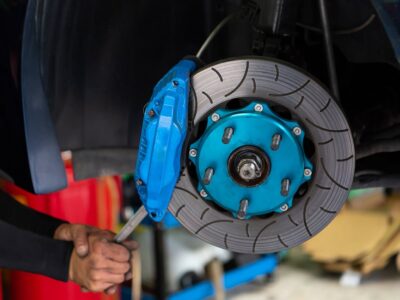
Factory brake pads often use metallic compounds that generate significant dust, squeal when warm, and suffer from brake fade under repeated heavy use. Upgrading to premium ceramic brake pads offers a more consistent pedal feel, operates quietly, and generates minimal dust. Pairing these pads with slotted brake rotors helps dissipate heat and gases away from the braking surface. This combination ensures that your brakes feel crisp and responsive every single time you press the pedal, regardless of driving conditions.
Stainless Steel Braided Brake Lines
When you step on the brake pedal, hydraulic fluid pressurizes flexible hoses to engage the brake calipers. Factory rubber brake hoses expand slightly under this pressure, which creates a soft, mushy pedal feel. Replacing them with stainless steel braided lines prevents this expansion. This simple upgrade delivers a remarkably firm pedal and gives the driver precise control over braking modulation.
Optimizing Driver Ergonomics
The direct physical touchpoints between the driver and the machine play a massive role in how control is perceived. Small ergonomic enhancements can reduce physical fatigue on extended road trips.
-
Weighted Shift Knobs: For vehicles equipped with a manual transmission, replacing a light plastic factory knob with a heavier, weighted aftermarket knob uses natural momentum to make gear changes feel incredibly smooth and mechanically precise.
-
Ergonomic Steering Wheel Wraps: A steering wheel that is too thin can cause hand cramping over long distances. High-quality, stitched leather or Alcantara wraps increase the thickness and grip texture of the wheel, reducing the effort needed to maintain a secure hold.
-
Performance Seat Inserts: If your factory seats lack adequate lumbar or lateral support, specialized high-density foam inserts can correct your driving posture. This minimizes lower back strain and holds your body firmly in place during spirited cornering.
By selectively upgrading these vital areas, you transition your vehicle from a basic transportation tool into a finely tuned machine optimized for your personal comfort and driving enjoyment.
Frequently Asked Questions
Will installing stiffer performance sway bars make my daily ride too harsh over bumps?
No, upgrading your sway bars generally does not ruin ride quality. Sway bars specifically control the side-to-side body roll of the vehicle during cornering. When you are driving straight over standard bumps, both wheels move upward together, meaning the sway bar does not resist the movement. This allows you to achieve much flatter, more controlled cornering handling without sacrificing the comfortable vertical compliance of your suspension.
How do lightweight wheels improve fuel efficiency alongside vehicle handling?
Lightweight wheels reduce both unsprung mass and rotational inertia. Because the wheels weigh less, it requires less mechanical energy from the engine to spin them up from a complete stop and less braking effort to slow them down. This reduction in required energy directly translates to improved city fuel economy while making the steering feel noticeably lighter and more responsive.
What is the operational lifespan of premium polyurethane suspension bushings compared to factory rubber?
Factory rubber bushings are prone to cracking, rotting, and tearing over time due to exposure to road salt, ozone, and engine oil, often requiring replacement every few years. Polyurethane bushings are highly resistant to these environmental factors and do not degrade under chemical exposure. As a result, they routinely last the remaining lifetime of the vehicle, though they must be lubricated properly during installation to prevent squeaking.
Can premium sound deadening materials add too much weight to my car and slow it down?
While older asphalt-based insulation sheets were incredibly heavy, modern premium sound deadening mats utilize highly dense butyl rubber combined with thin aluminum constraining layers. Fully insulating the critical areas of a standard sedan typically adds only twenty to thirty pounds to the overall vehicle weight. This microscopic weight increase has an undetectable impact on performance and fuel economy while providing massive benefits in cabin quietness.
Why do slotted brake rotors provide better control in wet weather conditions than blank rotors?
When driving in heavy rain, a thin film of water can build up between the brake pad and the smooth rotor face, briefly reducing braking friction. Slotted rotors feature shallow channels machined into the surface that act as escape routes for water, gas, and dust. This ensures the brake pad makes immediate, direct contact with the metal rotor, giving you predictable and instantaneous stopping power in the rain.
Do high-performance touring tires wear out faster than standard all-season economy tires?
Generally, high-performance touring tires utilize slightly softer rubber compounds to deliver superior road grip and noise dampening characteristics. While this means their overall treadwear rating might be marginally lower than a hard, economy-focused tire, premium manufacturers offset this by using advanced silica chemistry. This engineering allows modern premium touring tires to offer an exceptional balance of comfort and control while still delivering substantial mileage warranties.
How do stainless steel brake lines improve safety in emergency stopping scenarios?
In an emergency panic-stop situation, a driver stomps on the brake pedal with maximum force. Factory rubber lines can balloon outward under this extreme hydraulic pressure, delaying the time it takes for full fluid pressure to reach the brake calipers. Stainless steel braided lines contain a Teflon inner hose wrapped in a protective mesh of woven steel, which completely prevents expansion. This ensures that maximum braking force is delivered instantly, shaving critical feet off your total emergency stopping distance.